Blogs
Yoga for Burnout Recovery in Dubai: How to Reset When Life Moves Too Fast
Home Yoga for Burnout Recovery in Dubai: How to Reset When Life Moves Too Fast




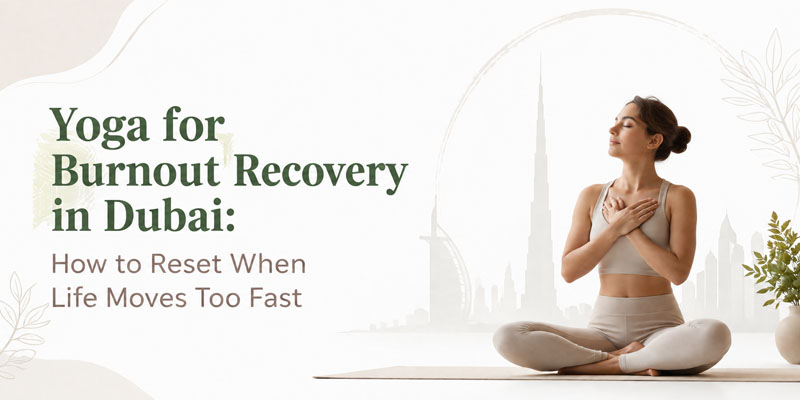
Life in a city such as Dubai most times consists of a lot of work hours, deadlines and very minimal time to relax. In the long run, this may cause burnout to occur, that is, you become mentally exhausted, emotionally drained, and physically low on energy. Health studies suggest that chronic stress, which is poorly recovered, may include such factors as sleep, attention, and even immunity. The initial step to recovery after burnout is to recognise it when it first appears.
Yoga does not only entail stretching or being flexible. It is a joint action on the mind and the body. Calming of the nervous system is conducted through slow breathing, mindful movements and relaxation techniques. This minimises the stress hormones, such as cortisol and gives the feeling of balance.
The practice of yoga on a regular basis has been found to help improve mood, enhance energy and help improve sleep. To an overwhelmed person, even 20-30 minutes a day can make a difference noticeable.
1. Gentle Movement
Begin with slow and easy postures like child pose, cat-cow pose or seated forward bends. These motions release bodily strain accumulated in the body and enhance blood flow.
2. Breath Awareness
Breathing exercises such as deep belly breathing, alternate nostril breathing or pranic breathing can be used to calm the mind. Breathing exercises help you to slow down a runaway mind and get you into the present moment.
3. Mindfulness and Stillness
It will only take a few minutes of silence or meditation to give your mind a chance to rest. It will assist you in putting aside your continuous thinking and reconnect with yourself.
4. Restorative Yoga
It is a form of yoga that employs some form of support such as cushions or blankets, in order to enable the body to relax completely. It particularly comes in handy in cases of burnout since it promotes restful sleep without any strain.
It is the consistency that is important than intensity. There is no need to spend a lot of time to feel better. Begin small, perhaps, 15 minutes in the morning or before going to bed. Eventually, this habit becomes a secure area where you can recharge every day.
In addition, minimize distractions during practice. Nondistractors: Get your phone off and make the surroundings as quiet as possible. This will make you have all your concentration on yourself, although it may be only on a temporary basis.
Recovery from burnout is not a question of working harder; rather, it is a question of working slower. Become conscious of the way your body feels. In case you are fatigued, you need to use soft movements. When you feel heavy in your mind, you need to concentrate more on breathing and relaxation.
The process of healing is time-honoured, and yoga teaches patience. Keep in mind that instead of trying to be perfect, strive to become consistent and aware.
In a place that is always in a hurry, making time for yourself may seem challenging but it has to be done. Yoga provides a natural, easy way to reconnect, reset, and regain balance. With time, it makes you feel more grounded, clear-headed and in control of your energy.
For those seeking to restore a calm routine and learn to deal with stress in a balanced manner, the practices guided by Tat Saayujyam would help usher in a state of calm in our normal routine.



Copyright 2025, All Rights Reserved.