Blogs
Yoga for Stress & Anxiety: Effective Poses to Calm Your Mind
Home Yoga for Stress & Anxiety: Effective Poses to Calm Your Mind




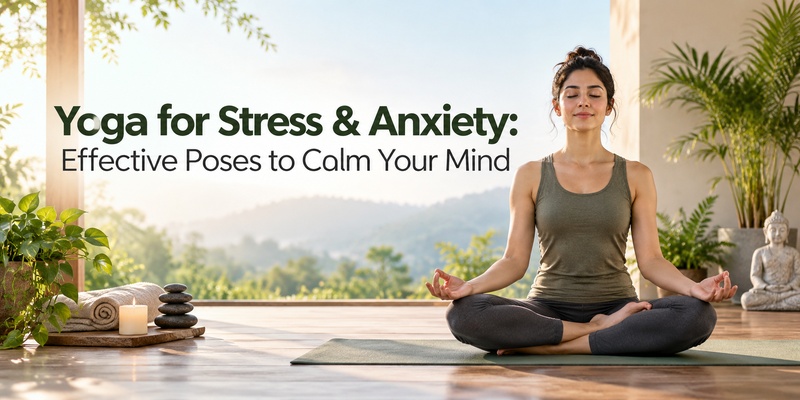
Stress and anxiety have become common parts of modern life. Busy schedules, work pressure, financial concerns, and constant screen time can affect both mental and physical health. While there are many ways to manage stress, yoga remains one of the most natural and effective practices. Regular yoga helps calm the nervous system, improves breathing, and promotes emotional balance. If you are looking for natural ways to feel more relaxed, practicing yoga for stress and anxiety can make a noticeable difference. Along with healthy habits and mindfulness, the right yoga poses can help you feel calmer, sleep better, and improve your overall well-being.
Yoga combines physical movement, breathing techniques, and mindfulness. These three elements work together to reduce stress hormones such as cortisol while encouraging relaxation.
Some key benefits of practicing yoga for stress and anxiety include:
• Promotes deep relaxation
• Improves sleep quality
• Reduces muscle tension
• Enhances concentration
• Supports emotional stability
• Encourages mindful breathing
• Boosts overall mental wellness
Even practicing for 20–30 minutes a day can positively affect your mood and mental health.
1. Child's Pose (Balasana)
Child's Pose is one of the most calming yoga postures. It gently stretches the back while encouraging slow, deep breathing.
Benefits:
• Relaxes the nervous system
• Releases tension from the shoulders and lower back
• Helps calm racing thoughts
2. Cat-Cow Pose (Marjaryasana-Bitilasana)
This gentle movement improves spinal flexibility while coordinating breath with movement.
Benefits:
• Reduces stiffness
• Encourages mindful breathing
• Helps relieve stress stored in the body
3. Legs-Up-The-Wall Pose (Viparita Karani)
This restorative pose requires very little effort but provides excellent relaxation.
Benefits:
• Improves blood circulation
• Reduces fatigue
• Calms the mind after a busy day
4. Bridge Pose (Setu Bandhasana)
Bridge Pose opens the chest and improves breathing capacity.
Benefits:
• Relieves mental fatigue
• Reduces mild anxiety
• Strengthens the back and hips
5. Seated Forward Bend (Paschimottanasana)
This gentle forward fold encourages relaxation and introspection.
Benefits:
• Stretches the spine
• Reduces stress
• Supports mental calmness
6. Corpse Pose (Savasana)
Although it appears simple, Savasana is one of the most effective relaxation poses.
Benefits:
• Slows the heart rate
• Reduces mental stress
• Promotes complete body relaxation
Yoga becomes even more effective when combined with healthy lifestyle habits.
| Healthy Habit | Benefit |
|---|---|
| Deep breathing | Reduces anxiety naturally |
| Meditation | Improves emotional balance |
| Proper hydration | Supports overall wellness |
| Regular sleep | Enhances recovery and mood |
| Balanced nutrition | Maintains physical and mental energy |
Following these habits consistently can strengthen the positive effects of yoga for stress and anxiety.
If you are just starting yoga, remember these practical suggestions:
1. Practice in a quiet and comfortable space.
2. Focus on slow, controlled breathing.
3. Never force your body into difficult positions.
4. Wear comfortable clothing.
5. Practice consistently rather than intensely.
6. End every session with Savasana for complete relaxation.
Yoga is a personal journey, and gradual progress brings long-term benefits.
Yoga can support mental wellness, but it is not a replacement for professional treatment. If anxiety becomes severe, interferes with daily life, causes panic attacks, or continues for several weeks, consult a qualified mental health professional. Yoga works best as part of a holistic approach that may include counselling, therapy, healthy routines, and medical guidance when necessary.
Practicing yoga for stress and anxiety is a simple yet powerful way to improve emotional well-being. Gentle poses, mindful breathing, and regular practice help reduce tension, improve sleep, and bring greater mental clarity. Whether you are new to yoga or returning after a break, consistency matters more than perfection. Over time, these calming practices can help you build resilience and maintain a healthier mind and body.
For individuals seeking a holistic approach to wellness, Tat Saayujyam encourages mindful living through authentic yoga practices that support physical, mental, and emotional balance.
Yes. Regular yoga helps lower stress hormones, improves breathing, relaxes muscles, and promotes mindfulness. Consistent practice can reduce anxiety symptoms and improve emotional well-being over time.
Child's Pose and Legs-Up-The-Wall Pose are among the most effective poses for immediate relaxation. They encourage deep breathing and help calm the nervous system naturally.
Practicing for 20 to 30 minutes daily is generally enough to experience noticeable improvements in relaxation, focus, and emotional balance when done consistently.
Absolutely. Beginners can start with simple, gentle poses and breathing exercises. There is no need for advanced flexibility, and regular practice gradually builds confidence and relaxation.
Yoga supports mental health but should not replace prescribed treatment without medical advice. It works best alongside professional care whenever anxiety significantly affects daily life.



Copyright 2025, All Rights Reserved.