Blogs
Yoga for Better Sleep in Dubai: Natural Fix for Insomnia & Night Anxiety
Home Yoga for Better Sleep in Dubai: Natural Fix for Insomnia & Night Anxiety




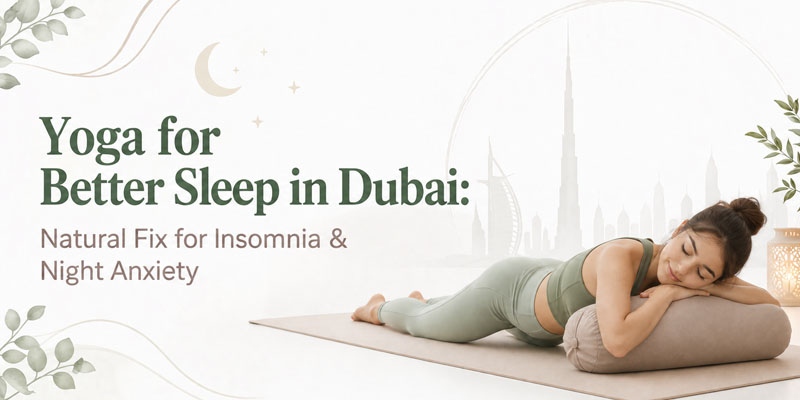
Sleep issues are increasingly becoming more prevalent than ever before in a fast-moving city such as Dubai. The abuse of long working hours, exposure to screens and continuous mental stimulation usually contribute to insomnia and night anxiety. It is difficult to fall asleep or get up with a bad mood. Yoga provides a better, natural, and effective method of enhancing the quality of sleep without the use of medication.
Modern lifestyles have broken our natural sleep cycle. Sleep studies suggest that adults require a minimum of 7-9 hours of sleep, but most people do not get enough sleep because of stress and unusual schedules. Artificial light, and especially phones and laptops, decreases the production of melatonin- the hormone that makes the person fall asleep. This will ultimately result in poor sleep habits and exhaustion.
Yoga is effective in that it helps to relax the body and mind. It stimulates the parasympathetic nervous system, which helps you relax and be ready to sleep. Slowness, deep breathing and mindful awareness lower cortisol levels, the stress hormone that tends to have people awake overnight.
Regular practice can:
• Minimise anxiety and thoughts of flight.
• Improve breathing patterns
• Relax tight muscles
• Encourage a regular sleeping schedule.
• Even 15-20 minutes of yoga prior to sleep can create a significant impact.
1. Gentle Stretching
Basic stretches are useful to relieve physical stress accumulated during the day. Target such areas as the neck, shoulders, and lower back. Light exercises are notices to your body that it is high time to relax.
2. Deep Breathing (Pranayama)
Exercises such as slow breathing in and out relax the nervous system. One of the most prevalent methods is the 4-7-8 breathing- inhale 4 seconds, hold 7, and exhale 8. This will go a long way in alleviating anxiety and will make the mind ready to sleep.
3. Legs-Up-The-Wall Pose
This yoga restorative position enhances blood flow and eases the lower body. It is particularly useful following a long day of standing or sitting.
4. Child’s Pose
A posture where the back is stretched lightly, and deep breathing promoted. It gives one a feeling of ease and security and makes the mind relax.
5. Guided Relaxation (Yoga Nidra)
Yoga Nidra is a type of guided meditation that promotes profound rest. Research indicates that it may be highly effective at improving sleep quality and alleviating insomnia symptoms.
In order to enjoy maximum benefits, make it a routine to practice yoga at a certain time during the night. Make sure that your room is dimly lit and that you turn off the screens at least 30 minutes before going to bed. Combine with a relaxing practice such as reading or listening to soft music. These habits will gradually become linked with sleep in your body.
Yoga is not merely a physical practice; yoga is a potent means of keeping mental balance and getting a restful sleep. By turning it into part of your nighttime routine, you can gradually condition your body to rest and rejuvenate.
For residents seeking to revive balance and inner peace through yoga, Tat Saayujyam provides a platform to reconnect with balance and inner calm.



Copyright 2025, All Rights Reserved.